Source refillable biodegradable cosmetic jar for Tea, Food, Chemical
Compare 30 verified options for refillable biodegradable cosmetic jar from suppliers in China. Explore customizable sizes, eco-friendly materials, and diverse sealing types suitable for tea, food, and chemical applications with ISO and CE certifications; compare the available evidence and request quotations based on your requirements.
Key considerations
Products List


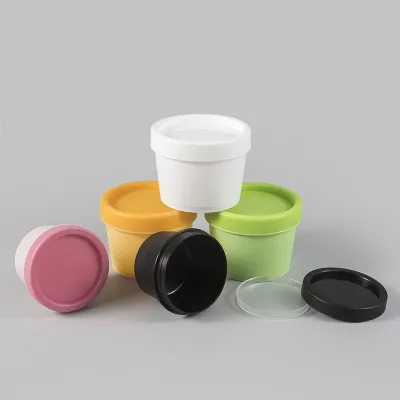


Comprehensive Sourcing Guide
Refillable Biodegradable Cosmetic Jar Sourcing Guide
Sourcing refillable biodegradable cosmetic jars requires distinguishing between standard plastic containers and truly sustainable alternatives, as the observed market data heavily features PP and PET materials rather than biodegradable polymers. Buyers must verify if the "Eco-Friendly" label refers to recyclability or actual biodegradability, since the provided listings confirm plastic composition and customization options but do not substantiate biodegradable claims for the specific models listed.
Procurement teams should prioritize suppliers who explicitly define their material lifecycle, as the current catalog shows a mix of standard cosmetic jars and specialized small package tanks. While customization is widely available for neck finishes and colors, the absence of specific biodegradable certifications in the high-confidence facts suggests that buyers must request independent lab reports to confirm environmental claims before committing to large orders.
Product Scope and Observed Listing Signals
The observed product range includes various cosmetic jars with capacities from 3g to 250ml, featuring pump sprayers and standard sealing types suitable for creams, lotions, and personal care applications. Listings indicate that these containers are often packaged in cardboard boxes or standard export cartons, with origins primarily traced to Yuyao and Zhejiang, China, reflecting a concentrated manufacturing hub for plastic packaging.
Buyers should note that while the keyword suggests biodegradability, the actual product attributes list PP and PET as the primary materials, which are durable and reusable but not inherently biodegradable without specific additives. The presence of "Small Package Tank" and "Cosmetic Bottle" models alongside standard jars indicates a diverse inventory, requiring careful filtering to isolate items that meet specific sustainability criteria rather than general eco-friendly marketing.
Technical Specifications to Verify
Technical verification must focus on the neck finish and volume consistency, as the data highlights customizable neck finishes and specific volume models like 50ml, 100ml, and 250ml. Buyers should confirm that the "refillable" designation aligns with the physical design of the jar, ensuring that the sealing mechanism, such as the pump sprayer, maintains integrity over multiple use cycles without leakage or degradation of the plastic structure.
It is critical to validate the material thickness and chemical resistance, especially since the products are listed for use with aerosols, chemicals, and food items. The observed specifications include models like UW-C004-083 and TY05307080002, which vary in capacity and design; procurement teams must ensure that the selected model's structural integrity supports the intended refill frequency and the specific viscosity of the cosmetic product being packaged.
Compliance and Safety Documentation
Compliance verification should prioritize the presence of ISO, CE, and SGS certifications, which are explicitly mentioned in the high-confidence facts for several product listings. Buyers must request current certificates for each batch, as the data also references California 65 and Reach chemical testing, indicating that suppliers may have specific capabilities for meeting stringent international safety standards for cosmetic packaging.
Documentation review must extend beyond basic certifications to include proof of material safety for direct contact with food and personal care items, given the listed applications. While some listings mention "Standard Specifications or Customized" standards, the absence of a universal biodegradable standard in the provided facts means buyers must explicitly ask for third-party test results confirming the environmental claims and chemical safety of the specific plastic formulations used.
Cost Drivers and Commercial Terms
Cost structures are influenced by the MOQ range observed between 10 and 30,000 units, with prices fluctuating significantly based on customization levels and material selection. The low observed price range of 0-1.5 USD suggests that basic, non-customized plastic jars are highly competitive, but costs will rise for specialized features like custom colors, specific neck finishes, or eco-friendly material modifications that are not yet standard in the provided catalog.
Commercial terms should be negotiated with attention to the "Standard Export Carton" and "Cardboard Box" packing options, which affect shipping volume and protection during transit. Buyers must clarify whether the quoted price includes the cost of the pump sprayer or if it is a separate component, as the sealing type is a key variable in the overall unit cost and the final assembly requirements for the cosmetic product.
Supplier Qualification and Quality Control
Supplier qualification requires verifying the origin of the manufacturing facility, as the data points to Yuyao and Zhejiang as primary production locations with established export capabilities. Buyers should assess the supplier's ability to handle "OEM Custom" requests, ensuring they have the technical capacity to produce specific models like the 90ml or 180ml variants while maintaining consistent quality across large production runs.
Quality control protocols must be established to monitor the consistency of the "Plastic Cosmetic Container" attributes, including color accuracy and structural strength. Since the listings indicate "Customized" options for various models, it is essential to implement a pre-shipment inspection process that validates the physical dimensions and sealing performance against the agreed-upon specifications to prevent defects in the final cosmetic packaging.
Long-Term Procurement Checks
Long-term procurement strategies should include regular audits of the supplier's material sourcing to ensure that any "Eco-Friendly" claims remain valid as production scales. Buyers need to monitor the stability of the supply chain for key components like pump sprayers and caps, as the reliance on specific models such as LY-P-38 or TY05307080001 could create bottlenecks if the supplier faces raw material shortages or production delays.
Sustainability tracking must evolve beyond initial certification checks to include ongoing verification of the product's lifecycle performance. Procurement teams should establish a feedback loop with the supplier to address any changes in material composition or manufacturing processes, ensuring that the refillable nature of the jars remains effective and that the environmental impact continues to meet the buyer's corporate sustainability goals over time.
FAQs
Can I customize the neck finish of these cosmetic jars?
Yes, the neck finish is fully customizable to meet your specific packaging requirements. This allows for compatibility with various dispensing mechanisms such as pumps or sprayers. You can work with manufacturers to ensure the jar design aligns perfectly with your brand's aesthetic and functional needs for personal care products.
What certifications do these plastic cosmetic containers hold?
These containers typically hold ISO, CE, and CIQ certifications, ensuring compliance with international quality and safety standards. Some suppliers also provide SGS and UL standards verification. Additionally, chemical testing for California 65 and Reach may be available, providing assurance for global distribution and regulatory adherence in various markets.
What is the minimum order quantity for these jars?
The minimum order quantity ranges from 10 to 30,000 units, offering flexibility for different business scales. This wide range accommodates both small trial orders and large-scale production runs. Buyers can negotiate specific MOQs based on their customization needs and volume requirements, making it suitable for various packaging projects.
Are these cosmetic jars suitable for cream and lotion applications?
Yes, these jars are specifically designed for cream and lotion applications within the personal care sector. They are made from durable plastic materials like PP or PET, ensuring product integrity. The design supports secure sealing and easy dispensing, making them ideal for various cosmetic formulations and packaging needs.
Where are these cosmetic jars manufactured?
These jars are primarily manufactured in Yuyao, Zhejiang, China, a known hub for plastic packaging production. This location offers access to established supply chains and manufacturing expertise. Buyers can source directly from these regions to benefit from competitive pricing and efficient logistics for international shipping and distribution.
What packaging options are available for these cosmetic jars?
Standard packaging includes cardboard boxes or standard export cartons to ensure safe transit. This protects the jars from damage during shipping and handling. The packaging is designed to be eco-friendly and efficient, allowing for optimal space utilization in containers and reducing overall logistics costs for bulk orders.